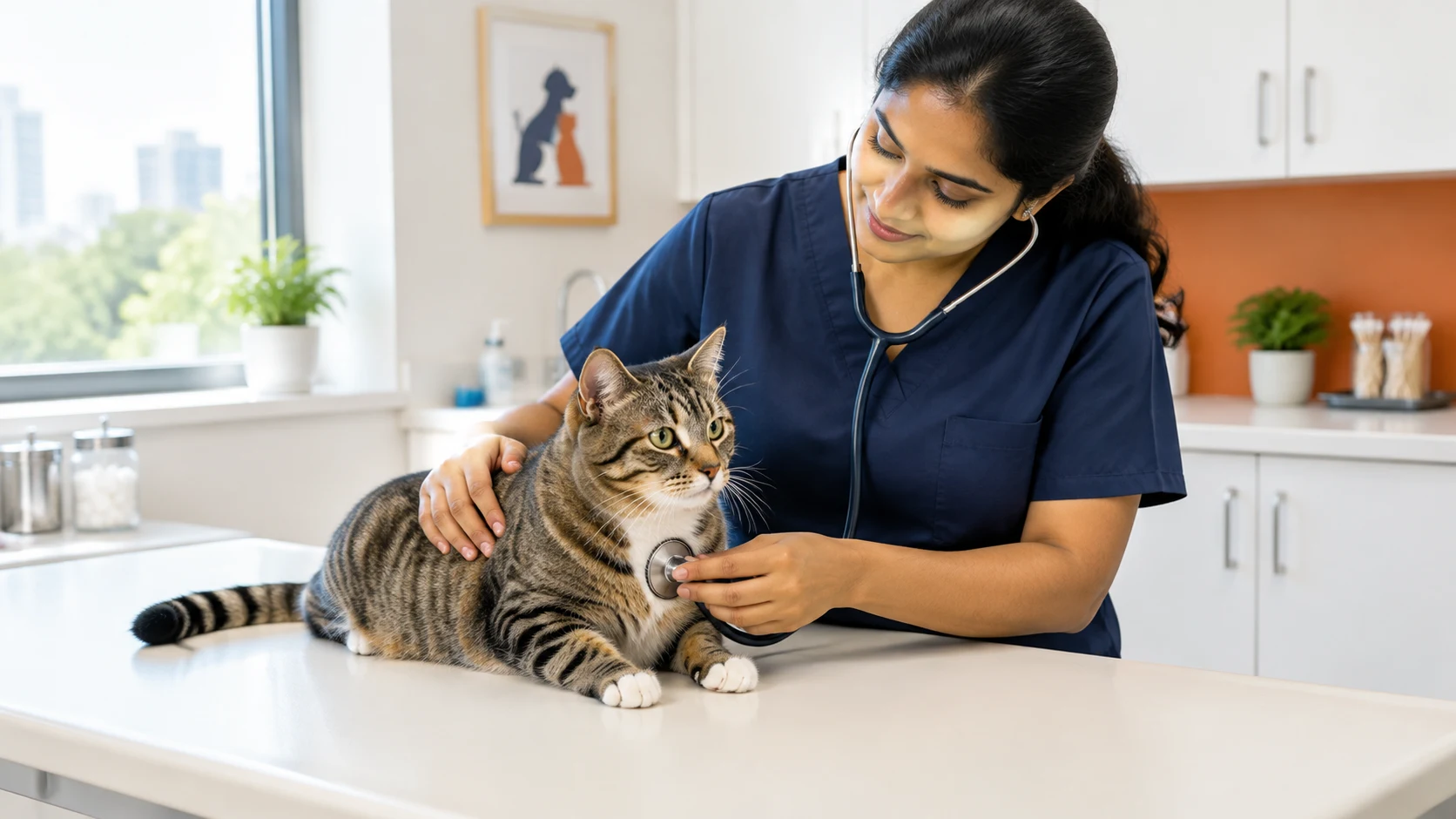

A familiar setting may make a veterinary visit easier for some anxious dogs and cats, but it does not remove every handling concern. Tell the team about previous fear or bites before the visit. A veterinarian can advise safe examination arrangements and whether hospital care is needed.
Tell the team about behaviour
Share what your pet usually does around strangers, previous handling difficulties and any bite history. This information helps plan the appointment safely. Do not hide anxiety concerns out of embarrassment; they are relevant to the welfare of both pet and staff.
Create a calm space
Use a quiet room and reduce crowding. Secure other pets and avoid chasing a cat immediately before the appointment. Keep a suitable carrier available if the vet recommends transport. Let the team advise on positioning and restraint rather than forcing handling yourself.
Do not use unprescribed sedation
Never give a sedative or leftover medication just to make an examination easier unless the vet specifically instructs you. Behaviour, pain and illness can overlap. The plan should consider your pet’s health as well as its reaction to visitors.
Before you book
- Disclose bite or fear history.
- Reduce noise and crowding.
- Ask before using any calming medication.
Common questions
Will a home visit guarantee a calm pet?
No. Responses vary, and the team may recommend a different approach based on your pet’s needs.
Further reading
Merck Veterinary Manual: when to see a veterinarian ↗Prepared from existing Dr. Doodley service information and general veterinary references. This article has not been individually reviewed by a veterinarian. For advice about your pet, contact your treating veterinary team.